Friday, 7 June 2013

Likoni Fishermen

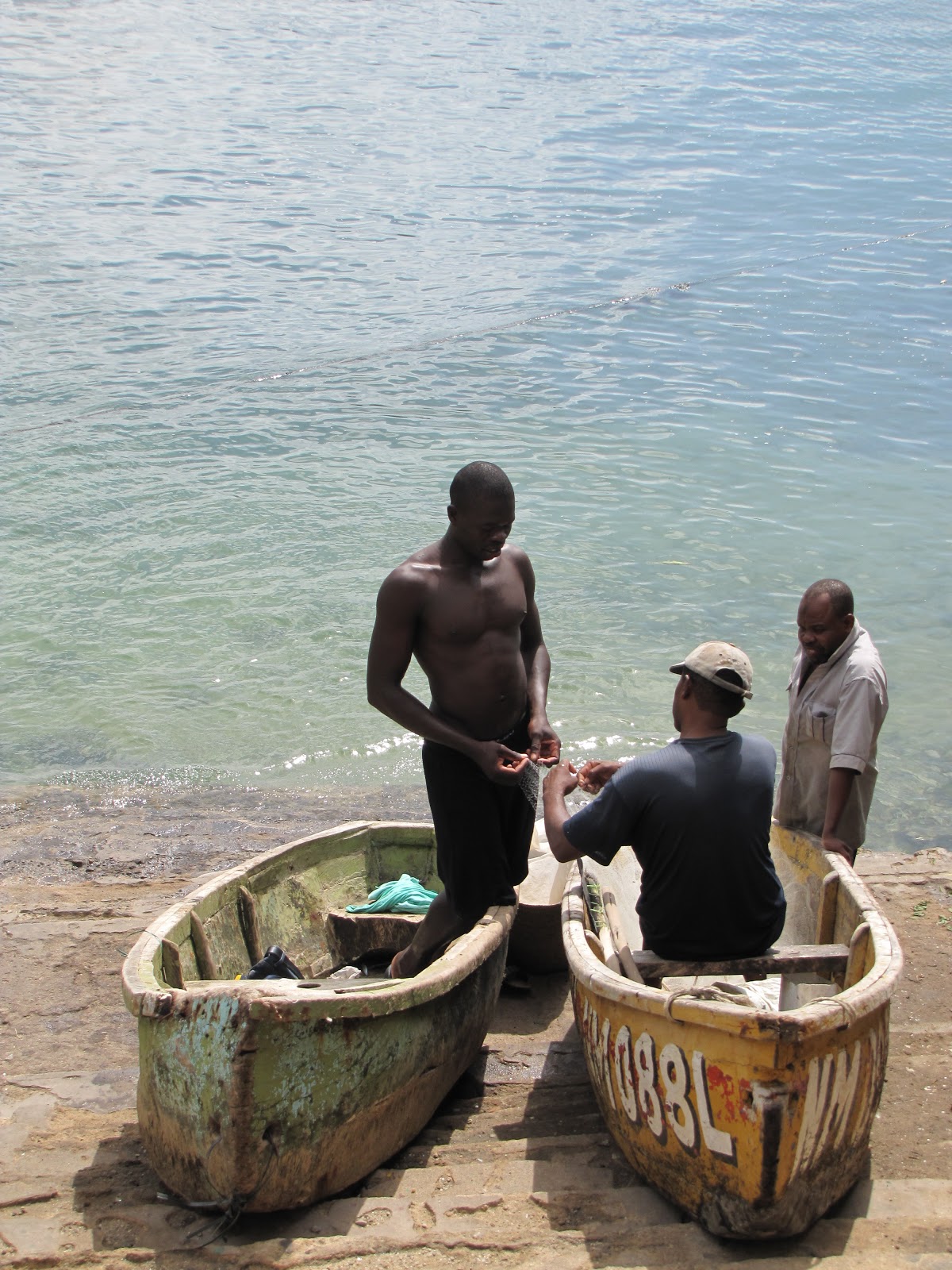
Fishermen fixing a net


The life of a small-scale artisanal fishermen is hard anywhere in the world, but here in Mombasa and along the East African coast, it is especially hard. The over fished waters and the lack of infrastructure makes fishing an unprofitable business, yet many continue, as this is all they know. As numbers of fish continue to drastically decline, the fishing techniques adopted by the fishermen become increasingly ruthless.

Unsustainable fishing techniques are one of many problems that threat the marine eco-system. For this reason, the Kenyan Department of Fisheries has enforced laws and regulations so fishing communities can take responsibility over the management of their fisheries resources. These are regulated by Beach Management Units (BMUs), which constitute of local fishermen and ladies. The idea is that after training from the government, the stakeholders should have the capacity to regulate each other and make decisions.

Thus far, BMUs have reduced the use of destructive fishing gears and the harvesting of undersized fish by 40%, but even thought they have played a role in the improvement of fisheries practices along the coast, there is still a great deal of work left to do. The improper management of some BMUs and the lack of regulation has resulted in basic regulations being broken. Targets are not being meet because of this, and even though there have been some areas of development, overall, the Kenyan Coast has far from recovered.

So, when I organised a meeting with the Likoni BMU, just South of Mombasa Island, I should have known better then to have expected to see an example of a perfectly run fishing co-operative. Consisting of over 600 fishermen, the Likoni BMU is one of the largest in Mombasa County. The management site stretches from Likoni Ferry, all the way down to the beginning of Tiwi, where there is another group of fishermen who are part of Kwale Beach Management Unit. Because of this, regulation and monitoring can be very difficult. This often leads to badly kept and often fragmented records. This can be frustrating for NGOs and government departments who want to help BMUs. 

Map of Mombasa and the Likoni BMU site

Like most BMUs, Likoni has a number of Bandas that are dotted along the beaches in it’s management area. Bandas serve as a sheltered area where meetings and training session can be held; where fish can be cleaned and traded. It’s a communal space and structures vary from basic huts to concrete buildings. The Likoni banda was built in 2007 by Eco Ethics International and the Lighthouse Foundation, two organisations that work with coastal fishing communities in Kenya.

Likoni Banda

The banda is situated two minuets away from Likoni Market. This is where I met the fishermen who were to show me around. I wasn't quite sure about their positions in the BMU, but was told they could answer any questions I had. We talked by the banda for a while, then was shown around the site.

The banda lookes out over the creek towards Mombasa Island and sits on a cliff, with stairs going down to the waters edge. It can be seen clearly from the south side of Mombasa Island. Walking up to the cliff to see the view of the Island, I noticed I was stood on a massive pile of rubbish that went down to a small patch of sand. The smell was horrendous and it was clear that this rubbish was being washed by the waves into the creek. It wasn't a pretty sight, and I was a little surprised that this was happening so close to where the fish was being handled.

Huge pile of rubbish outside the banda

I was told that I had missed the early morning catch, but had arrived just on time to see a late fishermen come in. I was told that the catch would be small, due to the size of fishermen's dhow and also because he was by himself. This would also suggest that he caught the fish using a line as it requires more then two hands to pull in a net. This method is preferred as it’s a more sustainable way of harvesting fish. As I also saw, the catch did not vary in size and species, as it otherwise would have if a net were being used. The only fish caught was the white snapper, an easy fish to catch along the reef. It bites on to inexpensive bait such as squid and is a good enough size to be marketable.

Fishermen coming in

The catch

The fish would normally have been weighed before being taken to the market. Two shillings for each kilogram is given to the BMU, kind of like tax that keeps the BMU running. This was not done with the late fishermen. I thought it may be because he arrived late. But when I asked to see inside the banda, I realised why the catch was not weighted. The place was a shambles, a mess beyond repair. The building was not being used and was covered in a thick coating of dust. This included the weighing scales. It was obvious the banda had not been used in a long time, and when I tried to take pictures, I was hurried out to see the selling of the white snapper in the market.

White snapper

A little dismayed and annoyed I walked up to the market to find a pleasant hubbub of activity. The selling and buying of fish was exciting. I’ve always been told that fresh fish should never smell fishy, and I must say, there was only a very slight hint of fishy odour in the air. The flies on the other hand were feasting, and I don't blame them, there was an incredible array fresh seafood.

Changu Fish
Selection of fish

Shark

Octopus

Rabbit fish


Talking to the fishermen, I began to realise that this was the low season for catching fish. They told me how this time of the year is hard for them, so sometimes they have to use nets. This results in some obscure species being caught. Rays are normally not eaten, but because they are caught up in the nets, they are flogged at the market for a cheap price.

Sting Ray

Further down the fish market I noticed a large collection of shells and conches. All of which are illegal to remove form the ocean bed if still alive. I wasn't all that impressed, especially when I saw the insides of a live spider shell being hung out to dry. I asked if the meat was eaten at all, and was told that it was only for decorative purposes. The shells are sold to tourists and locals who visit the beaches up and down the coast. Sold at 1,000 – 4,000Kenyan Shillings, I began to realise that this was a means of making a living during hard times. Although it’s not good for the ocean, it does mean that the fishermen’s family can be fed, clothed and schooled for the coming month.


Shells

Spider Shell drying

By the shells I also saw a shark’s jaw and a dried out puffer fish. I was not sure what their purpose was, and was little worried to ask as I got the impression that the fishermen were getting rather suspicious of my presence and picture taking.


Shark teeth

Dried out puffer fish
I took my pictures said my good byes, then headed for the ferry back to Mombasa Island. I began to  get the feeling that I had over stayed my visit, and that certain people were expecting me to pay them for allowing me to be there. The experience was confusing as much as it was frustrating. I had learnt a great deal, but nothing really that made me feel confident in the Likoni BMU. I left the market feeling disheartened by what I had seen. It is sometimes hard to see such things because you realise these practices mean the eventual demise of the artisanal fishermen, but at the same time I cant help but empathise with the struggles they seem to go through. It’s difficult enough to get farmers to see the long-term benefits of sustainable farming practices, but for fishermen it is a great deal harder as they can't see first hand their resources. This has led to project failure in many places.

Bellow is a short film made by Austin Humphries, a PhD student interested in how humans have altered the coastal ecosystems. The film shows techniques used along the Mombasa Coast to revive fish stocks but also the problems faced. It's an unbiased account of the struggles faced by fishermen, and the destruction done to the once colourful shallow waters of the East African Coast:

Mikono ya Wavuvi (In Fishermen's Hands) from Austin Humphries on Vimeo.


Monday, 3 June 2013

The Fundi’s Shack


It’s funny how you can find inspiring ideas in the most unexpected places. For the last four months, I’ve been walking past a bicycle fundi on my way to work, not really paying all that much attention to his set up. Up until a few weeks ago, we had only exchanged greetings, but that changed when I noticed a group of guys sat on what looked like computer monitors. I was intrigued and so decided to venture over and  take a closer look. What I found in the fundi’s shack were some fantastic examples of how E-Waste can be reutilised for everyday use. I discovered the shack is shared with three ladies who cook and serve food throughout the day. In the “kitchen” area, I noticed the very practical use of old fridge doors, used for storing fruit and veg. I liked what I saw, so I promised I’d come back to try their food.


On my second visit, I sat down for a cup of chai and a warm flaky chappatti. The ladies were in the process of making pilau, which smelt incredibly fragrant. I asked if I was allowed to take pictures, and although I was granted permission, no one could quite see what the fuss was about. I did try to explain to them why I thought it a cleaver use of waste materials, but as cultural differences go the idea wasn’t grasped, and chuckles and giggles made me realise that the monitor stools and the fridge doors were just another example in many of Kenyan resourcefulness. 

ABS (Acrylonitrile butadiene styrene) is probably one of the worst plastics for recycling, but because of its durable nature, it’s used a great deal in casings for electronic goods. This has meant, that not only is there a vast amount of e-waste that we will have to deal with, but it also a huge amount of plastic that can not be recycled. As e-waste becomes an increasing problem here in Kenya, creative solutions will be required to deal with the various components that come from electronic goods. This should be taken into consideration with the product’s life cycle, which sometimes will never have a “grave”. What I saw at the fundi’s shack made me realise, that because of the resourcefulness of Africans, there must be many examples in the least expected places on how to reutilise obsolete products in new exciting ways. Solutions are always there, but it’s up to the individual to be adaptable, as my friend the fundi has been. 

Monday, 22 April 2013

True Swahili Hospitality


Culinary appreciation takes a while to develop here in Mombasa. It has taken me two months to value Swahili food, and it’s not because the food is bad by any means, but because the variety available is not so obvious at first glance. With time I have come to understand that diversity comes with different locations. What people eat in Mombasa city is very different to what people eat in rural Mombasa. The people in the city come from all over Kenya and put preference on convenience, which is reflected in the food they eat. But go to the slow paced rural areas of Mombasa, and this is where you will find true Swahili food. The Swahili people are descendants of Arabic settlers and the indigenous Bantu people of Sub-Saharan Africa. They are hospitable, laid back, and very resourceful. Visiting these rural areas, you are forever reminded of the cross breed of cultures in the food they eat.

A recent visit to a small farm in Diani, the south coast of the Mombasa, was a perfect example of Swahili culture. We went to visit a group of farmers who were finding that their farm was too reliant on farming inputs. They were looking at ways of reducing this with assistance from a Japanese intern called Toshihiro Yoshida. Toshi’s task is a big one, and I wanted to see how he plans on overcoming these problems, by visiting the farm and talking to the farmer group.

Walking to the farm

Our journey began on the main tourist strip of Diani, where we were met by Toshi, who led us down a dirt track and away from the fancy beach hotels. As we headed inland, we noticed, that coral rocks still made up much of the ground. This is a problem for many farmers in the area as the coral that runs deep into the ground makes farming difficult, whilst also contributing to serious flooding during the rainy seasons because of it’s impermeable nature.We strolled through lush vegetation and darker soil for about 30 minuets. As we head towards the farm, we began to notice the plants around us: mango trees, coconut trees, cashew trees, maize and cassava. Hardy plants that are common across the Indian Ocean. Settlers introduced many of these plants to the coastal area for their ability to grow in tough conditions. Salty water and sandy soil has meant that there is little variety when it comes to growing fruit and vegetables. The difficult environment also means that only a few varieties of introduced crops have actually survived.

Toshi and Kursheui

When we arrived at the farm, Kursheui, the Chief farmer of the Mwakamba Farmer Group greeted us and introduced us to the rest of the farmers that comprised of both women and men. We talked about the lack of rain, and the expected yield of the season’s produce. We then discussed problems faced by the farmers with regards to their reliance on external inputs and considered ways of reducing this. As we talked, they began to reveal other problems: too much diversification, unpredictable weather and member fallouts. We took a look around their farm and noticed signs of trailed and failed projects: a big greenhouse; water tanks; a well with no pump; and an empty chicken coup. Classic examples of projects that have had heavy foreign investment but no post monitoring. A common problem in Africa. 

Mwakamba Greenhouse

This aside, (I don't really want to delve into the politics of agricultural development in this post), the farmers were very happy to consider our suggestions. We drew diagrams in the dirt to explain how they could make their own manual pump for the well, harness rainwater, and create their own compost heap. Communication can sometimes be hard, but in this case it was extremely hard as we had three languages in the group: Swahili, English and Japanese.


To show their gratitude we were treaded to a feast of fresh produce from the farm. We began with freshly gathered cashews. I had never really thought about how cashews grow, so I was really surprised to see this:


Cashew fruit growing on tree


Cashew fruit and pod

The cashew fruit smelt deliciously sweet when cut into. But because it was under ripe, it was extremely sour, and the skin was a little bit chalky. Despite this, I liked it. It was refreshing and juicy, which was exactly what we needed after three hours in the sun.


We then took our cashew pods and roasted them whole. This took as little as ten minuets. The tricky part was cracking the pods. Their exterior shell is extremely tough, which makes getting out the nut intact rather hard.


Raw cashews in their pods

Geting the cashews out of their pods, roasted

Roasted cashews


I can honestly say that freshly roasted cashews, straight out of their pods, are in my top five flavour experiences. The texture, the warmth and the nutty flavour was just incredible. I sat there in silence with the biggest smile on my face.


After this, we uprooted a cassava (mogo) plant and pulled off the edible roots. We rinsed them and peeled off the exterior then began munching on the white flesh. The milky starchiness of the root was thirst quenching, like sugar cane, whilst also being distinctly rooty… or earthy. Like maize, cassava can be ground into flour and is used to make mogo ugali, mogo bread and mogo ugi. It can also be boiled, roasted… and my favourite: thinly sliced, deep fried then sprinkled with chilly powder, salt and heavily limed. 


Peeling fresh casava

To top this off, a small semi dried coconut was collected. It was cut in half and we passed around the sweet coconut water.

Coconut

The white flesh was removed and everyone was given a piece. We were told to eat the raw cassava and coconut together and combine the two in our mouth for a third dimensional flavour… WOW! The fibrous texture of the cassava and the crunchiness of the coconut were harmonised by the simultaneous milkyness released by both counterparts. It was definitely an unforgettable flavour combination that I never would have thought of putting together.


Eating coconut and raw casava together

We refreshed at the well and as we did, Kursheui invited us to his house, which we were told was “20 minuets” away, in the adjacent coastal district of Tiwi. Without contemplation, we accepted. We said our good-byes to the other farmers and made our way by foot to Kursheui’s home.


In true African style we took the scenic route and walked “pole pole” through a few villages were we got distracted a few times and stopped and talked to people. We then came to a river crossing, where there was a man on his canoe, who, for 10 bob helped people get to the other side. “Before this, we used to cross the river by foot,” explained Kursheui. 

Crossing the saline river

We huddled into the tiny canoe and took in the surrounding beauty. On the other side we noticed these little funny guys:

Mangrove Crabs

We continued our safari in the stiffening heat for about 40 minuets, until finally we arriving to a Kurcheui’s “little” compound of self-sufficiency. A typical mud hut nestled amongst towering trees. We were taken around the compound and shown projects that Kurcheui was working on:

Natural fencing

Nursery

Sour fruit, used in cooking

Custard apples

As we relaxed under a big mango tree and sliced up a ripe mango. We talked about how Kurcheui’s father had passed down the land to him, about his future plans for the compound and his dreams to see his farming group grow.

We rested for an hour or so before heading to the local hospital for a cold soda. I noticed a few colourful murals on the wall aimed at spreading awareness about HIV. I noticed most of the people in the hospital were women, and that all were Muslim. The set up looked pretty good, and I was impressed by the accessibility for the local villages.

Poster, raising awareness about HIV

We downed our sodas and made our way to the main road. Our trip took longer then expected, but in all honestly I could have stayed longer. There was so much to learn and talk about that I felt that our trip was cut short.


Empty soda bottles

We got on our bus back to the hustle and bustle of Mombasa, and as we entered the city, I began to notice how different the Swahili culture of the city and rural areas are. The people, the language and the food of Mombasa are so different because of it's foreign influences, compared to the rural micro-culture of the rural villages.

This is what makes community specific projects important. At times when organisations are low on funding, they can hardly afford to go to the field and meet the communities they need to meet. Desktop research becomes the norm, and that connection with the community is lost. This is exactly what a great deal of organisations are suffering from. The organisation forgets about their initial intentions and gets bogged down with finding funding… and this is dangerous.

In the case of Mwakamba, they are lucky to have Toshi working closely with the farmer group over the period of two years. This integration and immersion process is vital in identifying actual community needs and implementing a sustainable project. It costs very little, or at least it should. It means that the community will eventually take control over their project with close training monitoring. Most importantly it helps preserve the community’s culture. It’s a timely process, but it means that projects last because they are community specific. Innovation not duplication is crucial.

The sincere hospitality I have experience here in Mombasa from small-scale producers is inspirational. They have all been through hard times, but despite this, they continue to welcome outsiders, such as myself. I feel like I have learnt much more then I can ever give, which makes these people are my inspiration. Asante Sana!  

Thursday, 17 January 2013

Theobroma Cocoa, The Food of the Gods


Cocoa has been cultivated for well over 3,000 years and remains one of the greatest discoveries of all time. The Aztecs valued chocolate so much they used the beans as a means of currency and also made xocolatl, a cocoa beverage which was drunk in court and during religious ceremonies. The process for cultivating, harvesting and processing cocoa beans has changed very little over the years:

“The beans would have first been collected, left to ferment naturally, sun dried, roasted in earthen pots, and de-shelled by hand. The kernels were then ground on a slightly concave stone called a metate using a cylindrical grinder. At this point, spices and herbs of various kinds, including vanilla, might have been added to improve the taste. The resulting paste was then formed into cakes to cool and harden. For consumption, the cakes would be broken up, dissolved in water, and beaten to a foamy consistency.” – Cocoa and Chocolate Manual, deZaan

The Spanish were the first to discover the possibilities of chocolate. They kept it a secret and conducted chocolate experiments for well over 140 years before the secrets of the cocoa bean leaked out to other European countries. Drinking chocolate became popular in Western Europe during the 17th Century and was serving as a source of tax revenue for governments. As the value of cocoa began to rise, attempts to cultivate varieties of Theobroma Cacoa followed. However, because of it’s specific cultivation requirements, initial efforts were met with disease and pests. Successful attempts were close to the tree’s origin of Mexico, places such as Brazil and the Caribbean Islands. By the late 17th century the Spanish had introduced cocoa to Asia, setting up the first cocoa plantation in Indonesia. Soon after, the seeds were taken over to West Africa where the Theobroma Cacoa has thrived ever since.

Ghana is the second biggest exporter of cocoa, and produces the highest quality cocoa in the world. Unlike it’s neighbour Ivory Coast who is the biggest exporter of cocoa, Ghana maintains high standards due to the country’s cocoa standards agency, COCOBOD. For Ghana, cocoa is a major export, and a vast amount of money goes into maintaining and regulating this. Cocoa is a cash crop, and for that reason most farmers will grow vegetables and fruit alongside the trees. This encourages bio-diversity that enhances environmental factors. This is only possible because the Ghanaian government does not allow the ownership of cocoa plantations by foreigners. Ghana was also the first cocoa producing country to start a farmer’s co-op, Kuapa Kokoo, who set an example as Fair Trade cocoa producers for the rest of the world. This small scale, regulated system of cocoa farming is unique and is why Ghana continues to export premium cocoa beans. 

Canopy created by Cocoa trees 
Most modern cocoa trees in Ghana are hybrids as they require specific environmental conditions and year round tending to maximise yields. These hybrids are much shorter (3 meters) then the original breed and can be grown in closer proximity (3 meters apart). A mature cocoa plantation creates a low canopy effect, blocking out 70% of sunlight and creating dense mulching on the ground. This makes for ideal-growing conditions: it allows for less light competition; allow for good airflow; and the soil retains sufficient moisture.

Cocoa pods grow directly of the trunk

Most cocoa trees reach their bearing age after 4 years, and will produce cocoa pods year round. The pods grow directly from the trunk of the tree, developing to be 15-25cm long. The average cocoa tree can produce up to 80 pods a year. Each pod contains approximately 30 beans. Once the cocoa stops producing its maximum yield the tree is cut down and replaced. Time is given for the ground to recover, by planting nitrogen, potassium and phosphorous rich plants. These nutrient rich plants are edible, which serves as an extra bonus for the farmer. Examples include plantain, banana, chillies, and cassava. It is also advised that cocoa trees are grown in and amongst other varieties of tall trees to protect them from extreme sunlight and to encourage bio-diversity. In Ghana especially, projects to help promote cocoa farming alongside agro-forestry have been extremely successful, producing high yields, extending the life of the trees and preventing the spread of diseases.


Even through the pods are cultivated year round, there is one main heavy harvest season, which extends from September through to December. I followed a group of Ghanaian cocoa farmers in Akimoda during this harvest period and I documented the process:


1.     The cocoa pods are collected. A machete is used to cut the pod away from the trunk cleanly and carefully, making sure the pod and the tree are not damaged in the process


2.     The pods are split, again using a sharp machete, being carful not to damage any of the beans inside the pod. 


3.     The beans are covered in a sweet sticky white pulp. This is scooped out into a basket. The husks are kept and ground-up to be used as organic fertiliser.


4.     The pulp is collected and loosely covered with banana leaves as not to allow any pests in, but still allowing sufficient airflow. The pulp is left to ferment for seven days, being mixed every couple of days. This process develops the chocolate flavour and colour.


5.     The fermented cocoa bean is then spread out on to large drying racks where they are left for a couple of weeks, being mixed every few days. The slow drying process intensifies the chocolate flavour and draws out the moisture content.

Left top: poorly fermented bean
left bottom: poorly dried bean
Right: well fermented and dried beans


The beans need to be fermented properly and dried thoroughly before they can be sold. Failure to do so could result in a contaminated/acrid tasting batch that will not be bought by cocoa buying companies. New geo-tracking systems allows for the COCOBOD to pick out areas where the process may not be followed properly. In this case, extra training and support is given to the farmers.


The farmer then takes his dried cocoa beans to the purchasing clerk who weights the beans and pays the farmer accordingly. When taken to the depot, the beans are dried for the second time to ensure consistency. The beans are put into hessian sacks, labelled and stored in the depot till there are enough sacks to make a journey down to the port.  

At the port, the beans are sold to the government, and then sold back to the buying company before being loaded onto cargo ships. This is a necessary formality as legally all the cocoa in Ghana is owned by the Ghanaian government.

The cocoa is either taken to Asia or Europe to be processed into chocolate. The cocoa beans are taken to a chocolate press where the cocoa beans are first cleaned, de-shelled, roasted, blended (to neutralise the flavour) and ground. They then go through a press that turns the ground up cocoa nibs into three different products: cocoa liquor, cocoa butter and cocoa powder. To make chocolate, cocoa liquor and cocoa butter is combined with sugar and milk powder.

Cocoa pressing

As cocoa powder is the by product, when the demand for chocolate goes up, there tends to be a great deal of cocoa powder that will also become available on the market, and this may not coincide with the demand of chocolate. Because of this the chocolate industry has had to find ways of balancing the markets. Cocoa powder tends to be used in cheaper quality processed foods and is even used in products to give an aroma of chocolate, rather then the flavour of chocolate. Cheaper quality chocolates will also use vegetable fats to substitute for cocoa butter during the manufacturing of chocolate, which is inexpensive and also easier to obtain. 

So the story of chocolate is rather fascinating. My simple overview of the process is a glimpse into how chocolate comes from land to plate, but the story is a great deal more complex then what I have portrayed. Corruption, child labour, inequality, unfair prices, lack of farming inputs, access to resources, climate change, pest and diseases, are all issues effecting cocoa farmers in Ghana and around the world. Due to signing a letter of confidentiality I am not allowed to discuss this information on my blog. But I will simply say that as consumers we can make a choice, and an educated one at that. Don't be sucked in by false pretences and promises that large manufacturing companies are making. As these companies try to go ethical, we must question their objectives and fully look into their motivations. Only first hand observations can tell you the truth. What once used to be the food of the gods, has now turned into a commodity that is trying to be capitalised on by wannabe gods. I’m sure you know what companies I’m talking about…