Showing posts with label Fair Trade. Show all posts

Thursday, 17 January 2013

Theobroma Cocoa, The Food of the Gods


Cocoa has been cultivated for well over 3,000 years and remains one of the greatest discoveries of all time. The Aztecs valued chocolate so much they used the beans as a means of currency and also made xocolatl, a cocoa beverage which was drunk in court and during religious ceremonies. The process for cultivating, harvesting and processing cocoa beans has changed very little over the years:

“The beans would have first been collected, left to ferment naturally, sun dried, roasted in earthen pots, and de-shelled by hand. The kernels were then ground on a slightly concave stone called a metate using a cylindrical grinder. At this point, spices and herbs of various kinds, including vanilla, might have been added to improve the taste. The resulting paste was then formed into cakes to cool and harden. For consumption, the cakes would be broken up, dissolved in water, and beaten to a foamy consistency.” – Cocoa and Chocolate Manual, deZaan

The Spanish were the first to discover the possibilities of chocolate. They kept it a secret and conducted chocolate experiments for well over 140 years before the secrets of the cocoa bean leaked out to other European countries. Drinking chocolate became popular in Western Europe during the 17th Century and was serving as a source of tax revenue for governments. As the value of cocoa began to rise, attempts to cultivate varieties of Theobroma Cacoa followed. However, because of it’s specific cultivation requirements, initial efforts were met with disease and pests. Successful attempts were close to the tree’s origin of Mexico, places such as Brazil and the Caribbean Islands. By the late 17th century the Spanish had introduced cocoa to Asia, setting up the first cocoa plantation in Indonesia. Soon after, the seeds were taken over to West Africa where the Theobroma Cacoa has thrived ever since.

Ghana is the second biggest exporter of cocoa, and produces the highest quality cocoa in the world. Unlike it’s neighbour Ivory Coast who is the biggest exporter of cocoa, Ghana maintains high standards due to the country’s cocoa standards agency, COCOBOD. For Ghana, cocoa is a major export, and a vast amount of money goes into maintaining and regulating this. Cocoa is a cash crop, and for that reason most farmers will grow vegetables and fruit alongside the trees. This encourages bio-diversity that enhances environmental factors. This is only possible because the Ghanaian government does not allow the ownership of cocoa plantations by foreigners. Ghana was also the first cocoa producing country to start a farmer’s co-op, Kuapa Kokoo, who set an example as Fair Trade cocoa producers for the rest of the world. This small scale, regulated system of cocoa farming is unique and is why Ghana continues to export premium cocoa beans. 

Canopy created by Cocoa trees 
Most modern cocoa trees in Ghana are hybrids as they require specific environmental conditions and year round tending to maximise yields. These hybrids are much shorter (3 meters) then the original breed and can be grown in closer proximity (3 meters apart). A mature cocoa plantation creates a low canopy effect, blocking out 70% of sunlight and creating dense mulching on the ground. This makes for ideal-growing conditions: it allows for less light competition; allow for good airflow; and the soil retains sufficient moisture.

Cocoa pods grow directly of the trunk

Most cocoa trees reach their bearing age after 4 years, and will produce cocoa pods year round. The pods grow directly from the trunk of the tree, developing to be 15-25cm long. The average cocoa tree can produce up to 80 pods a year. Each pod contains approximately 30 beans. Once the cocoa stops producing its maximum yield the tree is cut down and replaced. Time is given for the ground to recover, by planting nitrogen, potassium and phosphorous rich plants. These nutrient rich plants are edible, which serves as an extra bonus for the farmer. Examples include plantain, banana, chillies, and cassava. It is also advised that cocoa trees are grown in and amongst other varieties of tall trees to protect them from extreme sunlight and to encourage bio-diversity. In Ghana especially, projects to help promote cocoa farming alongside agro-forestry have been extremely successful, producing high yields, extending the life of the trees and preventing the spread of diseases.


Even through the pods are cultivated year round, there is one main heavy harvest season, which extends from September through to December. I followed a group of Ghanaian cocoa farmers in Akimoda during this harvest period and I documented the process:


1.     The cocoa pods are collected. A machete is used to cut the pod away from the trunk cleanly and carefully, making sure the pod and the tree are not damaged in the process


2.     The pods are split, again using a sharp machete, being carful not to damage any of the beans inside the pod. 


3.     The beans are covered in a sweet sticky white pulp. This is scooped out into a basket. The husks are kept and ground-up to be used as organic fertiliser.


4.     The pulp is collected and loosely covered with banana leaves as not to allow any pests in, but still allowing sufficient airflow. The pulp is left to ferment for seven days, being mixed every couple of days. This process develops the chocolate flavour and colour.


5.     The fermented cocoa bean is then spread out on to large drying racks where they are left for a couple of weeks, being mixed every few days. The slow drying process intensifies the chocolate flavour and draws out the moisture content.

Left top: poorly fermented bean
left bottom: poorly dried bean
Right: well fermented and dried beans


The beans need to be fermented properly and dried thoroughly before they can be sold. Failure to do so could result in a contaminated/acrid tasting batch that will not be bought by cocoa buying companies. New geo-tracking systems allows for the COCOBOD to pick out areas where the process may not be followed properly. In this case, extra training and support is given to the farmers.


The farmer then takes his dried cocoa beans to the purchasing clerk who weights the beans and pays the farmer accordingly. When taken to the depot, the beans are dried for the second time to ensure consistency. The beans are put into hessian sacks, labelled and stored in the depot till there are enough sacks to make a journey down to the port.  

At the port, the beans are sold to the government, and then sold back to the buying company before being loaded onto cargo ships. This is a necessary formality as legally all the cocoa in Ghana is owned by the Ghanaian government.

The cocoa is either taken to Asia or Europe to be processed into chocolate. The cocoa beans are taken to a chocolate press where the cocoa beans are first cleaned, de-shelled, roasted, blended (to neutralise the flavour) and ground. They then go through a press that turns the ground up cocoa nibs into three different products: cocoa liquor, cocoa butter and cocoa powder. To make chocolate, cocoa liquor and cocoa butter is combined with sugar and milk powder.

Cocoa pressing

As cocoa powder is the by product, when the demand for chocolate goes up, there tends to be a great deal of cocoa powder that will also become available on the market, and this may not coincide with the demand of chocolate. Because of this the chocolate industry has had to find ways of balancing the markets. Cocoa powder tends to be used in cheaper quality processed foods and is even used in products to give an aroma of chocolate, rather then the flavour of chocolate. Cheaper quality chocolates will also use vegetable fats to substitute for cocoa butter during the manufacturing of chocolate, which is inexpensive and also easier to obtain. 

So the story of chocolate is rather fascinating. My simple overview of the process is a glimpse into how chocolate comes from land to plate, but the story is a great deal more complex then what I have portrayed. Corruption, child labour, inequality, unfair prices, lack of farming inputs, access to resources, climate change, pest and diseases, are all issues effecting cocoa farmers in Ghana and around the world. Due to signing a letter of confidentiality I am not allowed to discuss this information on my blog. But I will simply say that as consumers we can make a choice, and an educated one at that. Don't be sucked in by false pretences and promises that large manufacturing companies are making. As these companies try to go ethical, we must question their objectives and fully look into their motivations. Only first hand observations can tell you the truth. What once used to be the food of the gods, has now turned into a commodity that is trying to be capitalised on by wannabe gods. I’m sure you know what companies I’m talking about…      


Thursday, 26 January 2012

Bana’s CafĂ©, Sagada, In search of some fine poop!

The town of Sagada nestled in the Mountains of Cordillera

A six-hour drive up one of the world’s most dangerous motorways, and five thousand feet above sea level, lays the stunning town of Sagada, high up in the Mountain Province of Cordillera. Lime stone cliffs, lush thick pine forests, along with what seems like endless rice terraces, surround the town of Sagada. The culture in the area is vastly different from the rest of the Philippines, as majority practice Animism. The belief that everything has a spirit and nature is to be respected is very evident in the organic development of the town. The houses are made of natural material, garbage is disposed of properly, and the youth have picnics in caves. There is very little Spanish or American influence, which means the town still retains a lot of tradition.

Sagada’s lush terrain along with it cool temperature is ideal for growing coffee. This was the reason for our visit: to see how the world’s most expensive coffee, civet or alamid coffee, is produced. Our search led us to Melay and Gohan Sibayen, a couple who have dedicated their lives to sourcing and roasting the best coffee available in the Cordilleras.

Bana's Cafe 

With the support of Bote Central (a member of The World Fair Trade Organisation), the couple were given an 18-day roasting machine so that the sourced coffee can be freshly roasted at the back of their cafe, saving on costs and giving the smaller farmers an even better price. Some of the coffee gets sent to Bote Central and some is kept in their café in Sagada, and sold to passing travellers.

The cafĂ© opened five years ago, the same time as the birth of their daughter Bana. Since then they have sourced and continue to source organically grown coffee, and Civet coffee from around the Mountain Province. They have encouraged the DTI, the local Department of Trade and Industry to recognise coffee as a lucrative crop, which should be encouraged amongst farmers. Now, Cordillera is recognised world-wide for it’s good quality and wonderfully aromatic Arabica coffee. This is still something that is reasonably new to a lot of Philippinos who are used to instant 3-in-1 pouches, but things are gradually changing, as more coffee shops are popping up. 

The hanging coffins of Sagada

So we wanted in on the buzz. Gohan took us for a scenic stroll through Echo Vally, where, as the name suggest, you can get a good echo reverberating through the Vally. We had some fun here, then headed down to see the hanging coffins, a tradition which is unique to Animist cultures, as it is believed the spirits can be free instead of buried in the ground. What I found so fascinating was how anybody got both the coffin and the body up such steep cliffs, and then even managed to nail it to the rock.

We walked further down the vally. The soil became slimier and the vegetation denser. My grip-less, white canvas trainers were not prepared for the hike, and I could feel every rock and twig underneath my feet. I wondered how Gohan was doing this in flip flops! As we approached an opening of a cave, Gohan pointed in the distance “look, that’s a coffee tree!” I honestly had no clue what I was looking at. Then as we moved further on, I realised a cluster of small trees with bright red berries hanging off them. 

A coffee tree

We were specifically looking for civet poop, and in a dense muddy forest, it’s not easy to find. We were told Civets live around limestone, and after eating the coffee berries, they find a high spot on which to sit and digest their dinner. This is were we would be likely to find their pricey droppings. We searched around for a good while but found only one bean!

Pooped civet coffee bean

We continued up to another farm, where some new Arabica plants were being grown. We stopped to have a rest and chomp on some oranges. 

Gohan 

As we munched away, Gohan explained how the farmer had designed the plotting of the plants to create a bio-diverse farming area. He explained the trees grown around the coffee plants were there to act as green manures, weed control and also as a shade for the little Arabica plants.

Young Arabica coffee plants

So off we set again on the search. We didn’t find any more droppings, but we did find some civet “spit outs” which apparently can be classed as second class to the poop beans.

Spat out civet coffee beans

Happy with our findings, we heading back to the café. Along the way we passed a running stream that led to another cave opening. Gohan told us there are 118 cave opening in the Sagada area, all connected. Some of these caves are accessible, but only with a guide. Others are only for experienced cavers. The intricate network is familiar with the locals as ceremonies are still held deep down in the caves, even to this day.

A cave with a running stream below a Sagadan house

Once back at the café we studied the difference between the civet poop bean, and the spit out bean. The difference was obvious even to the untrained eye. The reason why civet coffee is so revered in taste, is the process of bean selection and digestion done by the civet. Firstly it picks the most ripe bean, then if the whole bean is digested, only the soft flesh of the fruit is broken down, whilst the bean stays intact. The emzynes in the civet are said to enter the bean creating shorter peptides thus creating more amino acids. The taste of the coffee is smoother and chocolatier then regular coffee. As you can see from the picture below, the digested coffee bean has a rougher surface then the spat out coffee bean. As the spat out coffee bean has also been exposed to the enzymes, but for a shorter period of time, it is second class to the digested bean and still reaches a high price.

Left: Pooped bean (rougher exterior)  Right: Spat out bean

So now it was time to try some civet coffee. As expected, it was lovely. It was the first properly brewed coffee I had since leaving Vigan. The taste was not exactly as I expected though. There was a hint of nuttiness, almost hazelnutty. It was defiantly smoother then regular black coffee, but also had a drier after taste. Anyways… I’m no coffee expert, but I did defiantly enjoy it, especially after the long hike and whilst enjoying the beautiful views over Sagada.

A cup of civet coffee and a beautiful view

Tuesday, 3 January 2012

Spanish Sardine Producers, Guiwanon Multi Purpose Cooperative, Bantayan

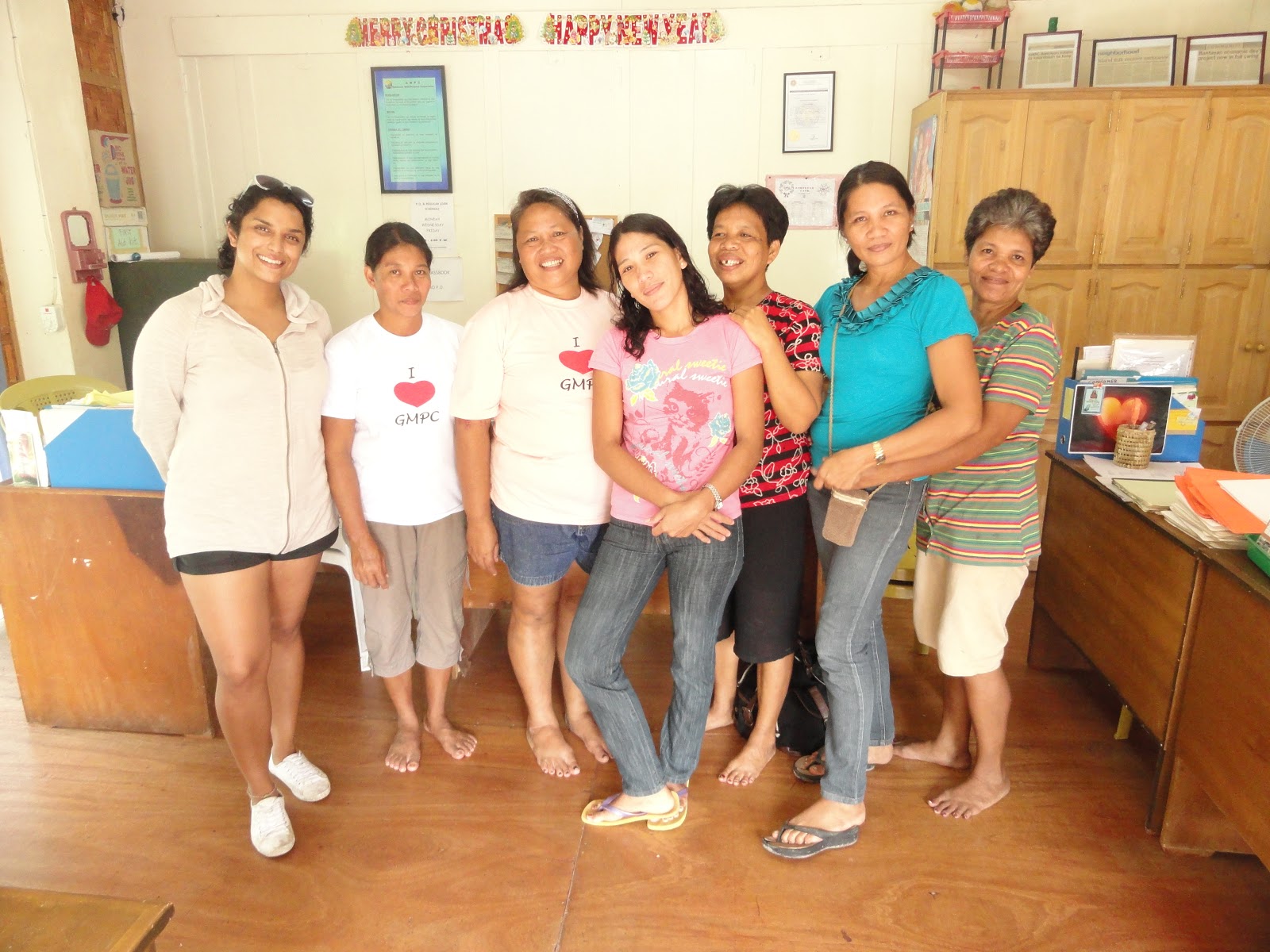
The Ladies of GMPC

The island of Bantayan, north west of Cebu Island, can only be described as quaint and idealistic. With no big vehicles or many cars on the road, the best way to get around the island is by bicycle, scooter or motorbike. So we rented a scooter and went on a bit of a wonder around the island, with our midway stop being the Guiwanon Multi Purpose Cooperative, or GMPC.


The journey was stunning. The day before, a storm had hit the neighbouring islands of Negros and Mindano, but Bantayan seemed to have been little effected. Our ride past mangroves and up along the coast was our first glimpse at an Island economically sustained by the fishing industry. It was a little surprise that the women we were on our way to meet, were utilising this abundance of fresh fish to produce a product for sale that captures the taste of Bantayan’s best: Spanish style sardines in oil.


Our arrival was greeted with warm smiles and even warmer hugs. We were shown around the GMPC’s community building, built and developed by the Justic Peace and Integrity of Creation- Integrated Development Center, INC (JPIC-IDC), a Christian NGO working in the Cebu region. JPIC helped the women of Guiwanon to develop business skills, they also provided them with training in agricultural sustainability, and helped in bringing the community together with a project aimed at empowering women in rural areas.

The GMPC Community Building

The community building had a shop, offices, a dinning venue, a conference room and a purpose built kitchen that the women could use in their business endeavours. We sat in the kitchen whilst the women finished of sealing and labelling some 93 bottles for shipment, and we realised the simplicity of the operation. There was nothing complicated about the process, it was a few simple steps from having fresh sardines to having preserved sardines that would last on a shop shelf for months to come. It was the training in health and safety and in quality control, which was the most important thing the women had learnt, and to put it into practice for their products to be marketable on a wider scale. 

The Kitchen where the sardines are produced

The women told me they bought their fish from the same fisherman every time, and assured me he practised environmentally friendly fishing methods. Along with the sardines, there are chillies, carrots, bay leaves and peppercorns in the preserve. The women told me all the produce comes from their gardens.

Along with the sardines, the women also produced Kropic. A rice cracker, which is dried to be preserved and then fried just before eating. They women made kropic in four different flavours: carrot, mulugay, squid, and shrimp. The weather needed to be hot and sunny in order to make the kropic as it requires drying in the sun for the whole day. But as unfortunately the rainy seasons were prolonging, the production of kropic had to be put on hold. 

Left to right: Carrot kropic and mulungay kropic

So it was time for, what I consider the best bit… the tasting!!! We got some bread, fried some kropic and opened a jar of sardines and dug in! I can’t say I’ve ever been a fan of sardines unless they were deep fried in batter, but these little shiny beauties were delectable. They had a lovely yet very mild flavour. I asked the ladies how they preferred to eat the sardines, and some suggestions were: fried and with noodles, with rice, in a sandwhich and ground up with liver as an accompliment to a meal. One women said here mother in-law liked then in her Lumpia (kind of like a large spring roll).

I really enjoyed meeting the women of GMPC. I personally felt they were living a decent life, where they were empowered to make their own living, help others in the community, and to stand an example of successful rural development. Programmes like this give people a chance, and shows that community improvement and development is they way forward to a better life, not moving to the city as many people see as a way of escaping problems. A lot of farmers and fishermen in the Philippines are moving to the cities to find jobs, due to crop failure, land disputes, visions of riches and even because of climate change problems. My visits to small producers has shown me that there are ways of making a living in rural Philippines with the right help and with more of an integration within village/town communities.  Obviously the right guidance is needed, and people need to see the benefits before part embarking on a project. But as I have seen: with the right support, the hope and the driven determination for a better future, this is the happenings for a better Philippines.

On the way back, we stopped for a swim in the sea to watch the sunset. I can’t even begin to tell you how beautiful Bantayan and how lovely the people are. I really recommend a visit. Enjoy the quite beaches, the local cuisine and the beautiful sunsets. It’s unspoilt and far from the crowds. It’s my heaven on earth : )

Coco Sugar


The Philippines is the largest producer of Coco Sugar. Made from the sap of the cut flower buds from the coconut tree, the coco sugar is full of beneficial properties, even for people with diabetes. Coco sugar has been used around Asia for centuries as a natural sweetener, but the true nutritional properties of the sugar have only been discovered in the last two decades. The Philippines is abundant in coconut trees, and in export of coconut produce. Due to the recent western interest in coco sugar, many coco farmers have taken to producing coco sugar/syrup for the foreign market. It has been reported that the benefits of coco sugar have been so evident, that health stores are selling out in record time.

People want in, and because of this, many companies are buying coco sugar from producers, putting the goods in their own packaging, and reaping the financial rewards, which exploits the rights of the farmers who produced the sugar in the first place. We met a young man called Vip, whilst in Cebu, and he told us about his endeavor to help small coconut farmers to producer, market and sell their own coco sugar. Vip was briefly in politics, before researching and developing a plan to help farmers in Cebu build up their self-esteem, by being businessmen as well as farmers, teaching them ways of not being cheated, and understanding the market of their product. His coco sugar project, called the Argao Coco Suagr Producer’s Coop,  has been hugely successful with new farmers even coming to his house in the middle of the night to be let on the programme. When we spoke to him, he told us his latest plan was to invest in dwarf coconut trees, which means the farmer’s are not dangering their lives, and wasting time by climbing 30-50meter high trees.

The process is nearly always organic, varying every batch made. This is entirely dependant on the tree and the minor time differences in the cooking process. Vip told us, the best way to extract sap from a coconut tree is to prevent the fruit from growing and placing natural tubes in the sap producing part of the flower buds. This gives a greater amount of sap then if they were to extract it from the bark with the fruits still being produced. The sap is then collected, and before it ferments, it has to be cooked instantly. The heat temperature and the timing is curtail in retaining the nutritional benefits of the sugar.

The taste of coco sugar is not as sweet as normal white sugar, but it has a caramel after taste, which is nice when used in baking and with tea and coffee. It also has a subtle taste of coconut that means Philippinos eat it almost as if it were a sweet. Why not when the glycemic index is 35, and when it has 10 times the amount of zinc then that found in brown sugar. We were even told that we could eat as much coco sugar as we pleased in one seating with out it having a negative effect on our bodies like sugar would. 

Sunday, 1 January 2012

Namaba Coconut producers - Sibonga


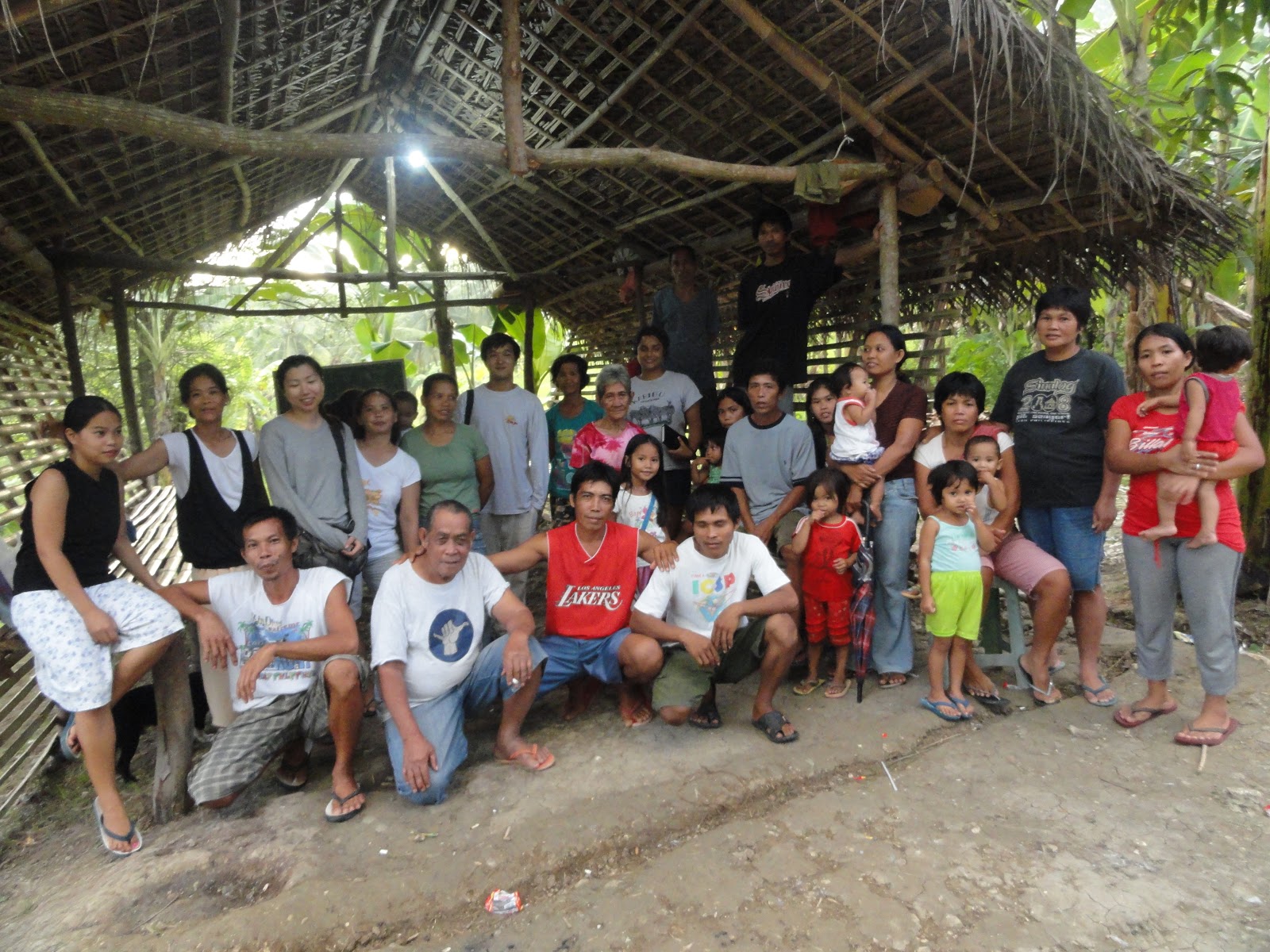
Our visit to the Namaba coconut producers in Sibonga was an insight into a prominent problem faced by many farmers in the Philippines. The land disputes, mainly between landowner and a group of farmers can last many years, and is something that can bubble up over time. As the rich nearly always get their way in a corrupt country, the farmers stand little chance in saving their lively-hoods. They are often forced to move else where and find other jobs, whilst the land they had once grafted so hard on is demolished to make way for new concrete houses, or sold to large plantation companies. The question here is: “is it not the land owner’s job to protect the people who inhabit his/her land?”

The story of the Namaba producers was actually more hopeful then sad.  From the community, 37 strong-minded farmers came together and tried to get as much help and support as possible in their feud. As it happens, the coconut farmers are 100% entitled to the land they inhibit. The owner is an American-Philippino who spends most of his time in America. He also doesn't legally own the land as it was originally sold to and is under the name of his mother in-law. The farmers claim the so-called “land-owner” is abusing his powers and wants to evict the farmers from the land because he can…. Why?  Well, like most things it was a series of events that escalated out of control. I was told a few stories that seemed rather petty, but they all seemed to agree the problems worsened after the Namaba community got together to sign a petition to close a battery chicken farm owned by the Land Owner, which sat amongst the farms and houses of the Namaba people. They claimed the chicken farm was making their children ill, and that it emitted a bad smell.  The farmers were successful, and the farm was shut down. As you can imagine, the landowner wasn’t best pleased with the outcome.

So from then the problems got worse. The landowner claimed the coconut farmers were selling “stolen” coconuts as it had come from his land. As things work in the Philippines, the owner is entitled to a percentage share of the over all produce from his/her land. The farmers even claimed the landowner was caught a couple of times trying to harvest the crops for his own benefits. Because of this, the famers won their case. As things worsened, the landowner called the police who brought arms and batons. Unjustly accused, the government got involved, and so did SPFTC, they got the Namaba people a lawyer to fight their case. With the support behind them, the coco farmers were successful and won the case….

…But during our visit, there was talk that the landowner was to come back from America with a stronger case against the farmers. This was worrying for the farmers, as even with the government support, corrupt ties within the rich can mean the law stands for little or nothing in many cases. SPFTC is also now finding it hard to fund the many land dispute cases that are now ongoing through out Southern Philippines. They are asking the government to supply a lawyer, as it is the job of the government to protect it’s people, but again this is a problematic and long process.

I have faith that the Namaba farmers will be able to beat such the corrupt system, and a bully of a landowner. The sense of community I felt during my visit was wonderful. They were so determined to fight what was wrong, and continued doing what was right, like still supplying the percentage of produced owned to the landowner. Because of this, they have so much support from the government, SPFTC, and the media. The coming together of a community during hard times is so curtail as I had seen. The farmers were smiling and talked of the optimism they held for the future of their children. I suppose it is in the Philippino culture “bahala na,” and expression used by the Philippinos, “all things will pass, and life is to be lived on.”


So as life was to be lived on, we sat in their meeting area, a community built outdoor bamboo structure, we ate some home made coconut ice-cream, and took in the beautiful views. This was defiantly something worth fighting for. 

Wednesday, 28 December 2011

The SPFTC production plant

In a small sleepy village outside of Cebu lies the heart of SPFTC’s Fair Trade production of their products, which include dried mangoes, mango balls, dried manangy, dried spices, tamerind, and virgin coconut oil. Theirs is an environmentally sound development consisting of a production area, an office, workshops, delivery vehicles all alongside allotments, plants and trees. We were shown around their site, which was built 16 years ago on leased land. The site gradually grew over the years, designed to be as environmentally friendly as possible. This was evident form the moment we drove through the entrance of the plant; pass gates and fences made from recycled plastic bottles. A great idea and a cleaver solution to the huge problem of plastic recycling and garbage disposal.


Rolo, the manager and overseer of the production side of SPFTC’s products showed us around. He’s sense of humour and approachable manor, made the tour really interesting. Rolo knew every statistic, all the ins and outs and had insightful answers for our every question. We are very grateful for his patience with us and for letting us pick his brain on the production processes.

The main body of the site is their production area that is made from three cargo containers. We were told that along with using a cheap recyclable structure, it was also chosen as an easy means of moving if they had to due to not owning the land their site is on.  


The SPFTC office was also made from a cargo container, which had a bit of work done to it. With wooden floors, an out door seating area and two large office spaces for admin. 


The grounds consisted of two mango trees, banana trees, managy trees and tamarind. Only the tamarind was grown for the processing process. The other produce came in from Fair Trade suppliers from around Cebu for production. The plants on sight were mainly for experimental processes only.


When we were there, SPFTC were experimenting with making mango balls from dried mangoes as an alternative healthy snack. And instead of buying in machines, Rolo and his team of engineers were coming up with their own inventions in production machines. 

Mango ball machine in the making
We were shown through the steps of process when making dried mangos, which is the same for other dried fruits, but with different timings in the process for depending on the water content of the fruit. We had to wear funny protective gear so not to contaminate the sanitised production areas. As no mangoes were being processed at the time, we weren’t actually able to see much production, but the picture give a good idea of the steps.

Rolo (left), shows us the production stages for dried mango in a sanitised container
1. Fist we were shown the area in which the mangoes are cleaned, peeled and sliced. Each mango had two large slices and four small slices. They had designed special peelers specifically for the mangoes so the inside fruit isn’t damaged and little flesh is removed with the skin. 

SPFTC's own design for a mango peeler
When we were there, a batch of malangy had come in for a similar process, they were placed in the cleaning up room to be ready to be processed. 

Malangy, ready to be processed
2. Then the mangoes are placed in large bowls filled with a syrup which then goes into an osmosis tank. This helps remove with the osmosis process, removing the water from the fruit. As mangoes are 80% water, the process of removing the water takes longer then a lot of other fruit. The mangoes are left in syrup for a day.    


3. After being removed from the syrup, the mangoes have lost 15% of their water. They are then blanched in hot water to remove excess syrup.

4.  They are then placed on racks that go into the dehydration ovens. This gives the mangoes a steady warm heat and an air flow allowing the mangoes to dry fully and lose all their water so they are just fruit. SPFTC has two dehydrating ovens that are heated using a water system that heats up from burning natural waste from coconuts, mango skins, and other waste from the plant. This process takes a day also.

Dehydration ovens
      5.After the dried mango comes out of the dehydrator it has lost all water and is pure fruit. They are left to sit in dark room, then packaged and labelled on site. 

    6. From 1000kg of mangoes the outcome is 150kg of dried mangoes. The mango stone is used in making mango puree. The stone is put through a specially design machine which removes as much pulp as possible. The pulp is then used to make mango juice. The syrup used in the osmosis process is also used in their juices. 

7. Each batch goes through quality control. A sample from each batch is kept if any future problems were to occur. 

Mangoes ready for export
After our tour, we were taken to the meeting room for refreshments and snacks. Her we discovered the full extent of the scale of work SPFTC did. To meet demands from the West and Japan, they had to make changes in their machines, in their production methods, in their packaging and labelling. This was interesting to hear. The changes took a long time, but there were creative solutions around this. For example, the dehydrators were run on a reverse fridge system. This was extremely bad for energy consumption, but with help and guidance, they came up with a water system that was heated using waste from the site.

Cleaver solutions like this and the inventions of machines for the production process not only makes me feel like SPFTC are advanced compare to larger producers in the Cebu area, but that they are very good at adapting to a greener, more sustainable way of manufacturing.

We had a great time, at the production plant. I almost have a problem calling it a “production plant”, because it didn't feel like that at all. It felt more like a place where good ideas sprang and greener possibilities were seen. It felt homely, lush with vegetation, clean, welcoming, and most of all a good example for production of similar products around the world.   

Tuesday, 27 December 2011

“Nearly Organic!” Mango Farmers, GBP Pusto - Carcar

Joel (right) and the Mango Farmers

Two hours car journey west of Cebu City, and 45 minuets by foot, high up in the Carcar mountains (and I mean really high up in the mountains), are 16 mango trees and 6 enthusiastic mango farmers. The journey by foot we were told is not too bad, you can wear flip-flops and do it easily. Well as we found out that was a huge exaggeration.  No motorised vehicles could go up after a certain point as the path get rockier and steeper, and even by foot, it was very dangerous as we carried our picnic in one hand and tried to balance with the other. I was surprised when we were told the mango farmers go down the same rout with 50kg of mangoes on their heads! 

View from the top, with the sea, which can just be seen form behind the mountains
Once we got to the top, we understood the reason for the location. On a hill, direct sunlight, cool breeze from the sea, and seclusion. We had a picnic with the farmers and then took a brief moment to absorb our surroundings.

Our epic picnic, with Yam, Hanging rice, Chicken,
Fish cakes, peanut butter  sandwiches and fresh coconuts
The six farmers of GBP came together with the help of Joel, from Safi and The Cebu Fair Trade Network, in an attempt to see whether the once heavily sprayed Mango trees can return to being 100% organic. Joel warned the farmers the road would be hard and there would be loses to start with, but if successful, the farmers would stand as an example to many other Mango farmers in Cebu. The farmers were brave and took the risk on their 16 medium sized mango trees.

As the trees had been sprayed heavily for 40-50 ears, with each year the percentage dose of chemicals increasing, the trees were in a bad state. Mango trees should only harvest once a year, but these trees were being harvested at least three times a year. There were 16 course of spaying done in each harvest. Meaning the tree was sprayed with chemicals 48 times in one year. There was a spray to increase the flowering of the tree, a spray for the insects (which also killed the good insects), a spray for the weeds and a spray for the mangoes. Sometimes the farmers never read the labels with instruction of dosage ratio, and often over dosed the tree. Sometimes the chemical company would put ground up insects in the spray, resulting in more tree pests, thus the farmer having to buy more pesticide spray. This all resulted in the trees and insects being more and more immune to the chemicals, and with the chemicals, not producing any fruit. 

One of the 16 mango trees
So Joel had a big job on his hand, and he needed to come up with a way of weaning the trees of the chemicals. The way he and SAFI suggested the farmers do this, was to still spray the trees, but to reduce the dosage each time, and eventually only harvesting the tree once a year. This meant the trees would still produce mangos, but each year the yield would decline, but as it did the mangoes were making their way to being more organic.

This process began in 2005, and next year they are hoping to have 100% organic mangoes. The trees looked healthy and the farmers even reported less insects. The numbers are estimated to be 3,000 mangoes per tree. This makes 48,000 mangoes in total for the harvest. It was so good to see the farmers were happy to have been taking a risk which they saw as being beneficial. From talking to other Fair Trade organisation I got the impression that some mango farmers still didn't see the benefits of changing when they could sell mangoes in the market, as organic doesn't have any weight in the smaller local markets. The farmers of GBP had good training from SAFI, and with Joel, they see a positive future in which they can produce marketable mangos which will reach a higher price, and have healthy trees which they can pass down to their children.  

Sat under the mango trees
The mangoes will then be sold to SPFTC to be processed into mango products, which get turned into dried mangoes, mango puree, mango jam, and mango juice. These will be exported to Japan, Itally, Germany, England, Hong Kong and Singapore.