Showing posts with label Sustainability. Show all posts

Thursday, 14 August 2014

Proximity Design, Yangon


A month ago, I was fortunate enough to have visited Proximity Design’s Office in Yangon, the winners of the CurryStone Design award 2013. Their approach to design for change is inspirational, not only because of their direct relationship with rural communities, but also because of the ingenuity of their designs. Proximity Design use the Human Centred Design (HCD) model when creating now products for their users. This requires living and working with their customer to develop live prototypes through participatory discussions and activities. This allows the designers to really empathise with their customers, which should inspire them to create products that are specialised to their needs as well as their budgets.

When talking to Jim Taylor, co-founder of Proximity Design, I began to realise the actual scale of the social enterprise and their operation. Not only had they successfully produced and distributed more than 110,000 irrigation pumps, water storage units and drip irrigation sets around Myanmar, but are also expanding to provide more services to their customers including financial services, farm advisory services, and are in the process of developing a solar energy range for use on the farm. At the time of my visit I was shown their latest design, a solar powered water pump, the cheapest in the world and soon to be sold to farmers. One project I found extremely interesting was a project being conducted by the graphics team who were working on information handouts that would be easily legible by farmers who are often illiterate and/or have eyesight problems. This included using HCD to develop clear graphics and a new font that would help communicate vital information to the farmers about how to use their products.

The range of products available allows small-scale farmers to increase yields sustainably, making such investments immensely beneficial. The products give farmers a reason to continue and expand their farming practices, hopefully considering it a viable means of making a living. Myanmar is extremely lucky to have a high water table, although there is often a minor problem of accessing, storing and distributing water on small farms. The range of products offered by Proximity Design allows for farmers to solve this problem and distribute water evenly throughout their farm, with little effort and also without relying on an unsustainable energy sources.

The staff at the organisation were a mixed bunch of young hip Mayanmese with different degrees and background. Jim told me that this was vital to create an innovative environment. I couldn't agree with him more, it seemed like the dynamic mix of engineers, social designers, innovators, anthropologists, and financial specialist made for the perfect knowledge base for the HCD process. This video explains a little bit more about this process and how Proximity Design use HCD to help rural farmers with their design of the foot pump which won the CurryStone award last year:


Monday, 30 June 2014

Street Market, Yangon, Myanmar

Myanmar, described as the final frontier of Asia. Still in the early stages of development, the country is vulnerable to external exploitations and this is being seen in the heavy influx of foreign investers who all want a cut of the virgin pie.

I am visiting my parents who have moved to Yangon last September (for some of this humble pie) and can not help feeling like I am part of the problem. Listening to expats whine and moan about the poor water quality, the lack of sanitation and the communication issues they have with their drivers is a little tiresome and frustrating. Worse still is the insistent trips to the only three air-conditioned malls/super-markets with "proper coffee", "sugar-free bread" and "cheese". I needed to escape and see what lay beyond Western Superficiality. So I took a trip down-town with chef Tuk Tuk from Horizon Golf Club, and ventured beyond the pagodas and river boats into the busy narrow streets of old Yangon. What I found was the most diverse variety of food, colour, and smells I had experienced since my arrival.

With 80% of the population still relying on agriculture as their main source of income, I truly hope this variety continues as Yangon develops, especially as padi-fields and farms around the city are being gobbled up by factories and high rise buildings. Like similar Asian cities, as competition increases with economic growth, there could be a reduction in variety of produce and an increase in more intensive agricultural practices. I wonder how this would effect the livelihoods of low-input agricultural farmers that supply majority of the city's fresh produce.

The polite patient nature of the Burmese people is something we could all learn from, but I feel it could also be detrimental when it comes to resisting the exploitation of human and environmental rights that are not being stripped by the government, but by foreign hands.

I dont want this post to be overly political. I would just like to show people what is worth preserving...

One of the many market streets in Down Town Yangon
Vegetables

Garnishes
Roots...  
...More Roots... 
...And Pickled Roots
Dried Mushrooms
Achari (Pickles)
Dried Chilli 
Fish Products
Chicken with all the bits and bobs
Live Eels
Fish, prawns, squid, clams and cray fish
Lobster and Langoustine 
Ice!!!
Pig and all the bits and bobs
Flowers
Indoor fish and meat market
Fruit 
Rambutan
Typical street in Old Yangon

Saturday, 14 September 2013

The Greenhouse Project, Johannesburg


The Greenhouse Project in Joubert Park, Central Johannesburg

If South Africa were a teenager it’d be going through a massive growth spurt. The country has a fast growing population and a booming economy, and unlike its African brothers and sisters, the country is strong, defiant and has a point to make. It has embraced America’s big and fast nature: large agricultural farms; massive industrial factories; huge supermarkets and mega sized malls. South Africa has it all… and like a hungry growing teen it will gobble up anything with little regard to future health problems.  

Despite this, it seems South Africa still bears scares from apartheid, and social recover has been slow and at often times futile. Poverty is still on the increase and even though Afrikaans now only make up 7% of the population, they still hold majority of the country’s wealth. Large wealth disparities are nothing new on the continent and unfortunately this is unlikely to change for a while. Townships are growing faster then ever before and urban spaces are becoming over crowded. Nelson Mandela’s equal country is far from being equal and although there has been a slight shift in the disparity (some whites moving down the social class ladder and blacks and coloured moving up) the gap is only growing. This is leading to basic social issues in the built environment such as waste management, food insecurity, access to clean water, recourse management, and inefficient use of energy.  

The South African government faces many challenges, but fails to acknowledge even the most basic. Reports have shown that unlike its war-torn neighbour Zimbabwe, the country is failing to meet Food Security targets for the most needy. What’s gone wrong? Well for one, the country is too focused on superficial growth: a great deal of investment has gone into large scale commercial farming (foreign market) which still dominates the country’s agricultural sector. Secondly the government is focusing on meeting shot term goals rather then long-term goals: this has resulted in a spike in food prices, since the 2010 World Cup, that most people cannot afford. Lastly, there has been little or no change in policies with regards to sustainable food systems. Food is a basic need, and when prices rise and salaries don't, people inevitably struggle and ultimately end up living in impoverish circumstances.

So when a government fails to meet the needs of the people it is often left up to a NGO to do what it can to solve the problem. Following a civil society campaign surrounding the issues of environmental sustainability in 1993, the Earthlife Africa Johannesburg activist group began to conceptualise an organisation that would serve as an inspirational space and support base where organisations can network whilst learning from live demonstrations and examples on how to build, cultivate and cycle resources in urban environments. This was eventually called The Greenhouse Project, which is now located on the North side of Joubert Park, Central Johannesburg. It’s in a not so desirable location, but that's beside the point. The project space is inspirational and is proof that with the appropriate techniques and with a bit of guidance any space can become a green haven.   

Example of veggies that can grown in an urban environment.
These are sold to the local community and the profits are
 reinvested into the organisation

The project follows the simple ethos that demonstrations, examples and access to information can lead to a more successful learning experience. Part of this is their agricultural area where a variety of growing systems are on show. The area also serves as a space to experiment, try out new techniques, but also to demonstrate what can be done with a bit of creative thinking. Here indigenous techniques are applied to the urban environment where the three ‘R’s (reusing, recycling and reducing) are carried out wherever possible.

Using old tyres as continuers in making organic nutrient rich fertiliser 

Projects like these allow for more area specific demonstrations to take place. For example, the northern part of South Africa is a semi arid terrain, which means it’s water scares for most of the year. The Greenhouse Project focuses on technologies, which allow for better water conservation in agriculture and daily life. This pass on of invaluable knowledge is crucial in helping meet needs on a long-term basis.


A garden being worked on by a group of children who come after school

Drainage system that collects rain water which then flows to
the gardens to water the plants

Rain water collecting system which is filtered and used for daily use

Reeds used to filer rain water


As well as this, the project space aims to make people rethink their consumerist behaviour by demonstrating what is possible by reusing, recycling and reducing. The two offices are made from 100% natural or reclaimed material and use natural lighting, insulation, renewable energy, aeration and water systems:

Reclaimed paving stones

Earth building made form 100% natural or reclaimed materials 

Kitchen space: White hydro bricks, reclaimed paving stones, and reclaimed wood

Office space with duel level natural lighting

Flooring: Reclaimed paving stones, natural clay, and wood is used

Second Kitchen Space: Natural paint, scrap metal lights,
 reclaimed wood and tiles 

Boardroom: natural lighting created by the glass ceiling which during
the summer time is covered by a cranadina plant and during the winter time
it sheds it's leaves allowing in more light
Artist workshop

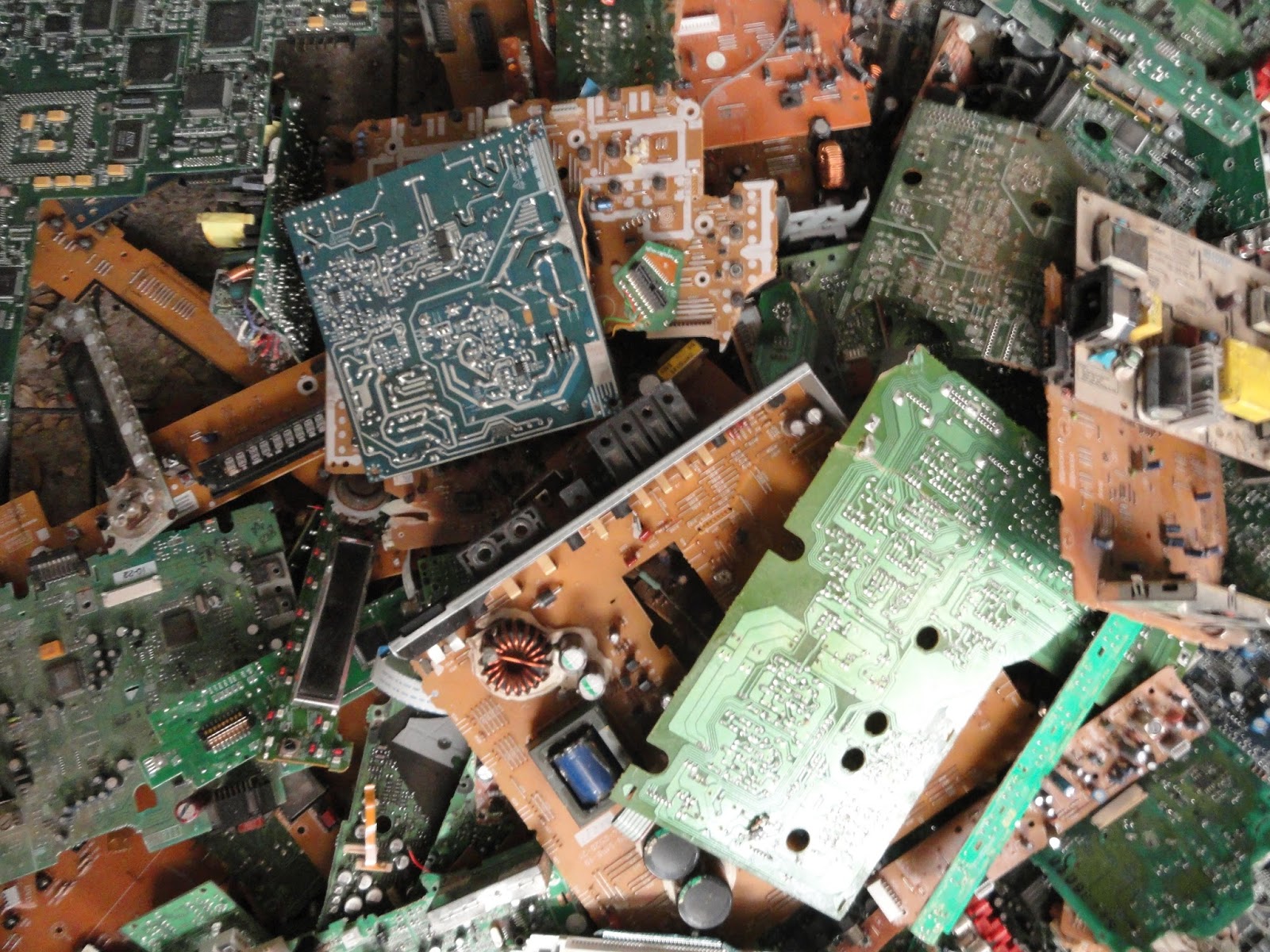
E-waste to be used by artists

Bycycles used to circulate the city in search of scrap materials


The organisation is visited by a wide variety of people form different communities: school kids from the city, groups of women from townships, agricultural groups from suburban areas, students and entrepreneurs. It targets the people who want to know, but thus far it hasn't been able to target the people who can make the biggest difference: the government. The organisation is desperate to target the government and their “brick housing” scheme for the townships. This scheme is seeing extremely flammable shacks in crowded townships being knocked down and replaced by brick structures courtesy of the South African government. The Greenhouse Project is pushing for the government to abandon conventional building techniques in replacement for more sustainable ones that would ultimately cost less. For example, they would like to see jobless immigrants trained in building and designing rainwater collecting systems, which would solve the problem of unemployment and the availability of clean water in townships. Simple solutions like these are what the Greenhouse Project are good at, but it seems like the government are more concerned with meeting superficial targets rather then sustainable ones.

Large billboard from Anglo American showing just how important
housing in South Africa is

The project provides help and advice to individuals and organisations on all aspects of sustainability: shelter, climate, ethics, energy, water, soil and food. More places like the Greenhouse Project are needed as spaces to experiment, learn and inspire the future generations about a sustainable future. African cities are growing rapidly and as they do so does the populations’ need for convenience over substance. A green space like this one not only helps us get back in touch with nature, it also inspires one to think more environmentally. It’s a no brainer that sustainable development is the way forward, but it’s how this is done that makes the difference. NGOs can only do so much for the people. It requires a change in policy from parliamentary level to make a lasting change for years to come. But as things go, governments only ever want to meet short-term goals to show the people that they are “meeting their needs”.


It takes a movement, and it seems South Africa is getting there, but very slowly. There is lack of education on environmental issues for the majority and because of this it’s only a small percentage that are making a difference. For example, “Urban farms”, “organic” and “community markets” in Johannesburg and Cape Town are terms mainly used by the affluent suburbanites and this comes with a price tag. It does little to solve the problem at grass root level. Urban farms should be feeding the immediate community, not people who have travelled an hour in a car to get there. Environmental education needs to focus on the majority to make a difference, and this is what the Greenhouse Project aims to do. Until governments can begin to make a lasting positive impact, it is left up to NGOs to fill the position of public educators and to turn around a situation that would otherwise be ignored.


It seems like there is so much happening in African cities that it’s easy to be caught up in the excitement of it all, but if there is something that can be learned from the economic crisis in the West, it’s that we cannot forget our sense of community as a citizen of the world. We need to have more open sources, access to education, talks, demonstrations and all easily accessible and available. It takes this knowledge to inspire activist to lobby for change. This ultimately plays a role in a sustainable change that can be reaped for years to come. If we can have more spaces like the Greenhouse Project to inspire people, we can be sure that South Africa will be an example to its African brothers and sisters: that, in spite of the country’s turbulent history, it continues to listen to the needs of its people and will endeavour to meet them for generations to come. 

Thursday, 26 January 2012

Bana’s Café, Sagada, In search of some fine poop!

The town of Sagada nestled in the Mountains of Cordillera

A six-hour drive up one of the world’s most dangerous motorways, and five thousand feet above sea level, lays the stunning town of Sagada, high up in the Mountain Province of Cordillera. Lime stone cliffs, lush thick pine forests, along with what seems like endless rice terraces, surround the town of Sagada. The culture in the area is vastly different from the rest of the Philippines, as majority practice Animism. The belief that everything has a spirit and nature is to be respected is very evident in the organic development of the town. The houses are made of natural material, garbage is disposed of properly, and the youth have picnics in caves. There is very little Spanish or American influence, which means the town still retains a lot of tradition.

Sagada’s lush terrain along with it cool temperature is ideal for growing coffee. This was the reason for our visit: to see how the world’s most expensive coffee, civet or alamid coffee, is produced. Our search led us to Melay and Gohan Sibayen, a couple who have dedicated their lives to sourcing and roasting the best coffee available in the Cordilleras.

Bana's Cafe 

With the support of Bote Central (a member of The World Fair Trade Organisation), the couple were given an 18-day roasting machine so that the sourced coffee can be freshly roasted at the back of their cafe, saving on costs and giving the smaller farmers an even better price. Some of the coffee gets sent to Bote Central and some is kept in their café in Sagada, and sold to passing travellers.

The café opened five years ago, the same time as the birth of their daughter Bana. Since then they have sourced and continue to source organically grown coffee, and Civet coffee from around the Mountain Province. They have encouraged the DTI, the local Department of Trade and Industry to recognise coffee as a lucrative crop, which should be encouraged amongst farmers. Now, Cordillera is recognised world-wide for it’s good quality and wonderfully aromatic Arabica coffee. This is still something that is reasonably new to a lot of Philippinos who are used to instant 3-in-1 pouches, but things are gradually changing, as more coffee shops are popping up. 

The hanging coffins of Sagada

So we wanted in on the buzz. Gohan took us for a scenic stroll through Echo Vally, where, as the name suggest, you can get a good echo reverberating through the Vally. We had some fun here, then headed down to see the hanging coffins, a tradition which is unique to Animist cultures, as it is believed the spirits can be free instead of buried in the ground. What I found so fascinating was how anybody got both the coffin and the body up such steep cliffs, and then even managed to nail it to the rock.

We walked further down the vally. The soil became slimier and the vegetation denser. My grip-less, white canvas trainers were not prepared for the hike, and I could feel every rock and twig underneath my feet. I wondered how Gohan was doing this in flip flops! As we approached an opening of a cave, Gohan pointed in the distance “look, that’s a coffee tree!” I honestly had no clue what I was looking at. Then as we moved further on, I realised a cluster of small trees with bright red berries hanging off them. 

A coffee tree

We were specifically looking for civet poop, and in a dense muddy forest, it’s not easy to find. We were told Civets live around limestone, and after eating the coffee berries, they find a high spot on which to sit and digest their dinner. This is were we would be likely to find their pricey droppings. We searched around for a good while but found only one bean!

Pooped civet coffee bean

We continued up to another farm, where some new Arabica plants were being grown. We stopped to have a rest and chomp on some oranges. 

Gohan 

As we munched away, Gohan explained how the farmer had designed the plotting of the plants to create a bio-diverse farming area. He explained the trees grown around the coffee plants were there to act as green manures, weed control and also as a shade for the little Arabica plants.

Young Arabica coffee plants

So off we set again on the search. We didn’t find any more droppings, but we did find some civet “spit outs” which apparently can be classed as second class to the poop beans.

Spat out civet coffee beans

Happy with our findings, we heading back to the café. Along the way we passed a running stream that led to another cave opening. Gohan told us there are 118 cave opening in the Sagada area, all connected. Some of these caves are accessible, but only with a guide. Others are only for experienced cavers. The intricate network is familiar with the locals as ceremonies are still held deep down in the caves, even to this day.

A cave with a running stream below a Sagadan house

Once back at the café we studied the difference between the civet poop bean, and the spit out bean. The difference was obvious even to the untrained eye. The reason why civet coffee is so revered in taste, is the process of bean selection and digestion done by the civet. Firstly it picks the most ripe bean, then if the whole bean is digested, only the soft flesh of the fruit is broken down, whilst the bean stays intact. The emzynes in the civet are said to enter the bean creating shorter peptides thus creating more amino acids. The taste of the coffee is smoother and chocolatier then regular coffee. As you can see from the picture below, the digested coffee bean has a rougher surface then the spat out coffee bean. As the spat out coffee bean has also been exposed to the enzymes, but for a shorter period of time, it is second class to the digested bean and still reaches a high price.

Left: Pooped bean (rougher exterior)  Right: Spat out bean

So now it was time to try some civet coffee. As expected, it was lovely. It was the first properly brewed coffee I had since leaving Vigan. The taste was not exactly as I expected though. There was a hint of nuttiness, almost hazelnutty. It was defiantly smoother then regular black coffee, but also had a drier after taste. Anyways… I’m no coffee expert, but I did defiantly enjoy it, especially after the long hike and whilst enjoying the beautiful views over Sagada.

A cup of civet coffee and a beautiful view