Showing posts with label Coffee. Show all posts

Sunday, 15 September 2013

The Department of Coffee, Western Cape


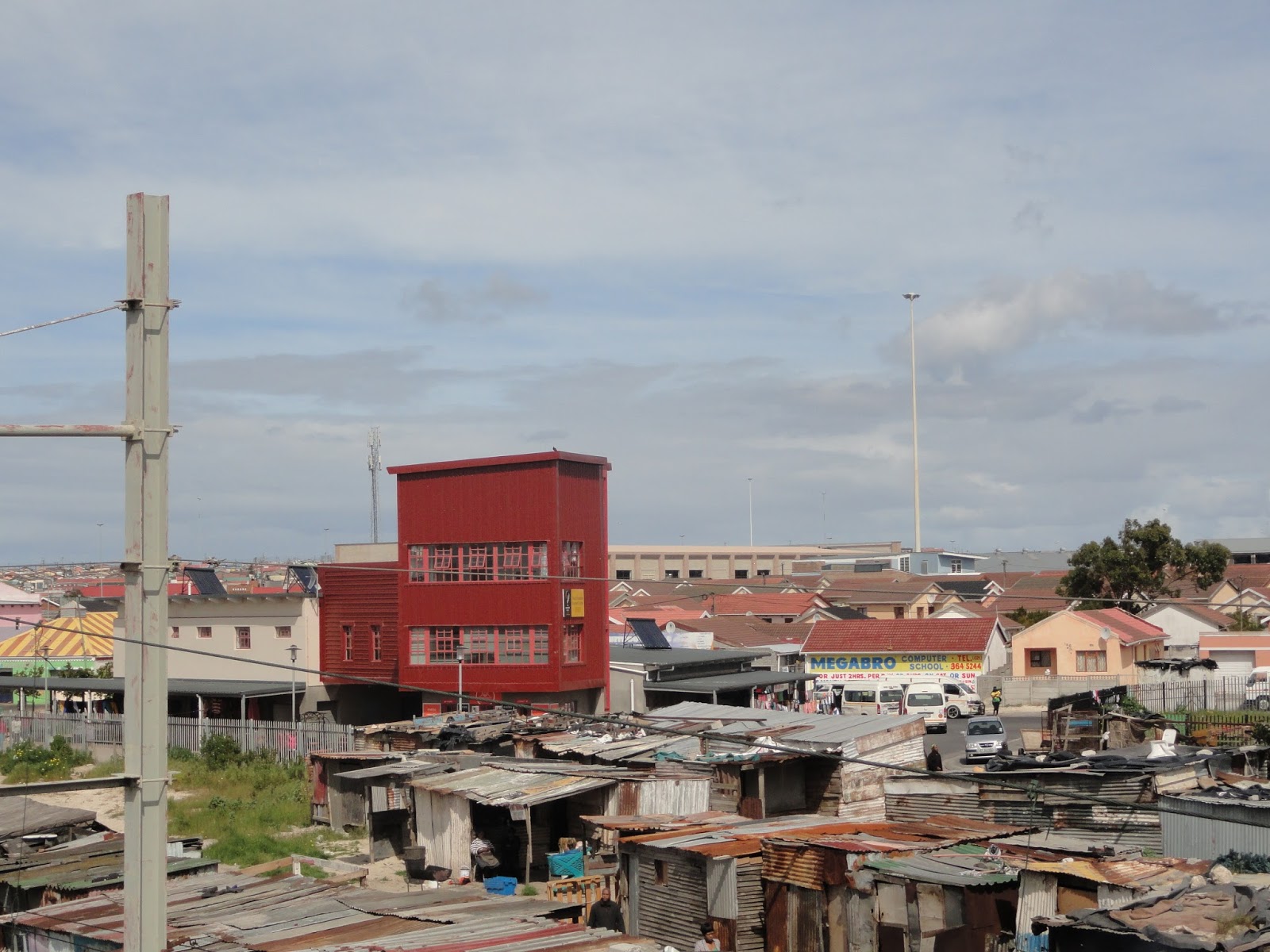
The view of Khaylistsha from the train station. The Department of Coffee is clearly visible (the big red building)

Travelling around South Africa can be rather frustrating as it seems like everyone is scared of being mugged, raped, hijacked, kidnapped or…. even murdered! Yes it’s a problem here, but it does feel like the whole security thing is a little too hyped up. Most of the people who advice against certain modes of transport or visits to “dodgier” parts of town tend to be the ones that rely on hear-say rather then actual experience to make their naïve judgments. I was told NEVER to get in the local minibus/taxis, but when asked if they’d even set foot in one, the reply was “No way!”. This segregation is what prevents and restricts the breakdown of social stigma. It’s not really spoken about, but there is still a great deal of racism in South Africa. I have seen it and experienced it. Some may sadly believe it’s part of daily life. Ultimately it is inhibiting the country from moving forward.

  
After the forced removal of 60,000 black and coloured residents from the inner city area of Cape Town in the 1970s, the evicted residents were forced to find elsewhere to settle. The black community moved to the numerous townships that surrounded the city. Since then, little has changed and the Western Cape still remains racially segregated twenty years after apartheid ended. Inner city Cape Town remains a predominantly “white area”, whilst the surrounding townships are nearly all “back areas”.  

Khayelitsha is one of these areas and is the largest and fastest growing township in the country. It has had a great deal of bad press recently as it remains the only township with a growing rate of violent crimes as well as being the township where Annie Dewani was murdered. The estimated population is 400,000 with less then 5% being over 50 year of age and around 40% being under the age of 19. The population is young and majority of the new residents are rural to urban migrants. Unsurprisingly, unemployment is considerably high bringing with it problems with drugs and alcohol abuse.

Tours around Khayelitsha and other townships are starting to pop up and are actually proving to be rather popular with “adventurous” tourists. Volunteers have also started to flock in to help out in township orphanages and schools. These initiatives only target the “foreign tourist” market though and does little to breakdown barriers with Cape Town residents.

Frustrated by the divide and the problems faced in their township, three young lads from Khayelitsha got together with the Ministry of Service Delivery to come up with a solution using the skills and resources they had available to them. Vuyile Msaku, Wongama Baleni, and Vusumzi Mamile set up the Department of Coffee as a way of regenerating their area. The concept is simply to have a hub where people from all backgrounds can meet over a coffee. Their slick look, strong brand identity and even stronger coffee has proven to be a success with both locals and Cape Townies alike. Based opposite Khaylitsha’s only train station and on the bottom floor of the VPUU (Violence Preventions Through Urban Upgrading) building, the boys are in an easily accessible location where they can target local businesses, anyone coming off the train, and most importantly youth seeking advice.


The prices at Department of Coffee are extremely reasonable (a cup of coffee in town = R22)


The guys are all professionally trained baristas who use only the finest arabica beans from Ethiopia which are roasted locally and ground freshly using only the best equipment. The menu is extensive, offering a variety of coffee, teas, hot chocolate and muffins. Currently they are trying out a range of “red” beverages, made from loose Rooibos leaves that are used in the same way as you would ground coffee. The outcome is surprisingly sweet and refreshing, proving popular with visitors.

Like most good coffee shops, the Department of Coffee deliver to local businesses, the local court house, local hospital, and even make special Muffin Runs to children’s homes where they hand out muffins bought with money donated by their customers. The best bit is, their products are modestly priced, making it affordable for the average Khaylitshan resident. As history has shown, the most successful enterprises are the ones that know their market inside out, including knowing how to price their products appropriately.


It seems like since they started a year ago Vuyile, Wongama, and Vusumzi have done some great things, and it doesn't seem like they want to stop. They have started to hold monthly CoffeeMobs which aims at bringing people from Cape Town to Khaylitsha via a free train service. The event includes local music artists, arts and crafts and of course great coffee. But more importantly it is a chance for the people of Khaylitsha and Cape Town to mingle over a shared appreciation for all things good. Last month a group of Cape Town cyclists decided to organise a bikeathon from the city to the coffee hub that helped raise money for regeneration projects in the township. Talking to Vuyile, I was told they were hoping to expand by opening another Department of Coffee where they would have a sit down service where they could also serve hot food.


The Department of Coffee, a growing franchise 


There’s no doubt that these guys are super ambitious and it’s rubbing off on the youth in Khaylitsha who have seen what can be accomplished with a bit of determination and the right guidance. The boys not only serve as amasszing baristas, they also offer advice and support for the youth of the township. We are reminded that when it comes to making a difference in the community, it is ultimately left up to the people of that community to make that change.

Cape Town has been named the Design Capital of the world 2013/14 and they are specifically looking for designs that solve social, cultural and environmental issues. I can’t think of a better nomination then the Department of Coffee. Their well thought out concept has been marketed incredibly well. Through the use of facebook, local media and most importantly word of mouth, the organisation has become something worth finding out about. This has attracted attention from coffee loving Cape Townies and from the local youth who so desperately need role models to look up to. The idea has been successful for it’s simplicity and effectiveness to focus on their main issue: “breaking down the wall between Cape Town and Khayelitsha.” Nothing can stop these guys and from the looks of it, the Department of Coffee is bound for great things. 

Thursday, 26 January 2012

Bana’s Café, Sagada, In search of some fine poop!

The town of Sagada nestled in the Mountains of Cordillera

A six-hour drive up one of the world’s most dangerous motorways, and five thousand feet above sea level, lays the stunning town of Sagada, high up in the Mountain Province of Cordillera. Lime stone cliffs, lush thick pine forests, along with what seems like endless rice terraces, surround the town of Sagada. The culture in the area is vastly different from the rest of the Philippines, as majority practice Animism. The belief that everything has a spirit and nature is to be respected is very evident in the organic development of the town. The houses are made of natural material, garbage is disposed of properly, and the youth have picnics in caves. There is very little Spanish or American influence, which means the town still retains a lot of tradition.

Sagada’s lush terrain along with it cool temperature is ideal for growing coffee. This was the reason for our visit: to see how the world’s most expensive coffee, civet or alamid coffee, is produced. Our search led us to Melay and Gohan Sibayen, a couple who have dedicated their lives to sourcing and roasting the best coffee available in the Cordilleras.

Bana's Cafe 

With the support of Bote Central (a member of The World Fair Trade Organisation), the couple were given an 18-day roasting machine so that the sourced coffee can be freshly roasted at the back of their cafe, saving on costs and giving the smaller farmers an even better price. Some of the coffee gets sent to Bote Central and some is kept in their café in Sagada, and sold to passing travellers.

The café opened five years ago, the same time as the birth of their daughter Bana. Since then they have sourced and continue to source organically grown coffee, and Civet coffee from around the Mountain Province. They have encouraged the DTI, the local Department of Trade and Industry to recognise coffee as a lucrative crop, which should be encouraged amongst farmers. Now, Cordillera is recognised world-wide for it’s good quality and wonderfully aromatic Arabica coffee. This is still something that is reasonably new to a lot of Philippinos who are used to instant 3-in-1 pouches, but things are gradually changing, as more coffee shops are popping up. 

The hanging coffins of Sagada

So we wanted in on the buzz. Gohan took us for a scenic stroll through Echo Vally, where, as the name suggest, you can get a good echo reverberating through the Vally. We had some fun here, then headed down to see the hanging coffins, a tradition which is unique to Animist cultures, as it is believed the spirits can be free instead of buried in the ground. What I found so fascinating was how anybody got both the coffin and the body up such steep cliffs, and then even managed to nail it to the rock.

We walked further down the vally. The soil became slimier and the vegetation denser. My grip-less, white canvas trainers were not prepared for the hike, and I could feel every rock and twig underneath my feet. I wondered how Gohan was doing this in flip flops! As we approached an opening of a cave, Gohan pointed in the distance “look, that’s a coffee tree!” I honestly had no clue what I was looking at. Then as we moved further on, I realised a cluster of small trees with bright red berries hanging off them. 

A coffee tree

We were specifically looking for civet poop, and in a dense muddy forest, it’s not easy to find. We were told Civets live around limestone, and after eating the coffee berries, they find a high spot on which to sit and digest their dinner. This is were we would be likely to find their pricey droppings. We searched around for a good while but found only one bean!

Pooped civet coffee bean

We continued up to another farm, where some new Arabica plants were being grown. We stopped to have a rest and chomp on some oranges. 

Gohan 

As we munched away, Gohan explained how the farmer had designed the plotting of the plants to create a bio-diverse farming area. He explained the trees grown around the coffee plants were there to act as green manures, weed control and also as a shade for the little Arabica plants.

Young Arabica coffee plants

So off we set again on the search. We didn’t find any more droppings, but we did find some civet “spit outs” which apparently can be classed as second class to the poop beans.

Spat out civet coffee beans

Happy with our findings, we heading back to the café. Along the way we passed a running stream that led to another cave opening. Gohan told us there are 118 cave opening in the Sagada area, all connected. Some of these caves are accessible, but only with a guide. Others are only for experienced cavers. The intricate network is familiar with the locals as ceremonies are still held deep down in the caves, even to this day.

A cave with a running stream below a Sagadan house

Once back at the café we studied the difference between the civet poop bean, and the spit out bean. The difference was obvious even to the untrained eye. The reason why civet coffee is so revered in taste, is the process of bean selection and digestion done by the civet. Firstly it picks the most ripe bean, then if the whole bean is digested, only the soft flesh of the fruit is broken down, whilst the bean stays intact. The emzynes in the civet are said to enter the bean creating shorter peptides thus creating more amino acids. The taste of the coffee is smoother and chocolatier then regular coffee. As you can see from the picture below, the digested coffee bean has a rougher surface then the spat out coffee bean. As the spat out coffee bean has also been exposed to the enzymes, but for a shorter period of time, it is second class to the digested bean and still reaches a high price.

Left: Pooped bean (rougher exterior)  Right: Spat out bean

So now it was time to try some civet coffee. As expected, it was lovely. It was the first properly brewed coffee I had since leaving Vigan. The taste was not exactly as I expected though. There was a hint of nuttiness, almost hazelnutty. It was defiantly smoother then regular black coffee, but also had a drier after taste. Anyways… I’m no coffee expert, but I did defiantly enjoy it, especially after the long hike and whilst enjoying the beautiful views over Sagada.

A cup of civet coffee and a beautiful view